

Meta’s advertising platform has undergone more change in the past 18 months than in the previous five years combined. The introduction of Advantage+ Shopping Campaigns, the expansion of AI-driven creative tools, and the continued erosion of manual targeting options have fundamentally altered how performance marketers need to think about Facebook and Instagram advertising.
For Australian brands spending on Meta, the question is no longer whether to adopt these changes, but how to do so strategically without sacrificing the control that has historically driven results.
The Shift to AI-First Campaign Management
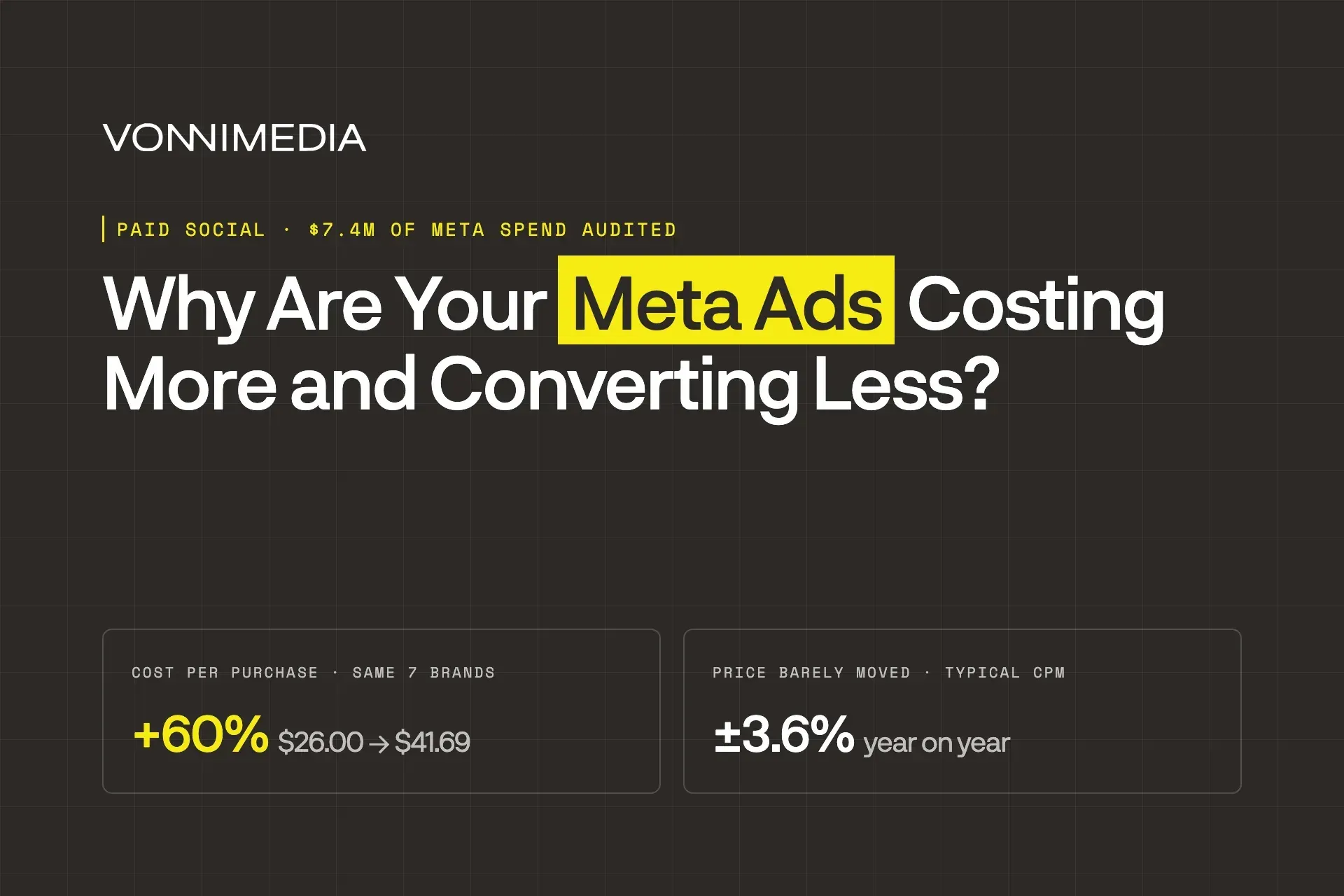
Meta’s Advantage+ suite is now the default recommendation for most campaign objectives. Advantage+ Shopping Campaigns (ASC) have proven particularly effective for e-commerce brands, with Meta reporting that advertisers using ASC see an average 17% improvement in cost per purchase compared to standard shopping campaigns.
The trade-off is control. ASC removes many of the manual levers that experienced media buyers have relied on, including audience segmentation, placement selection, and creative rotation. Meta’s algorithm takes over these decisions, optimising in real time based on conversion signals.
Creative Is Now the Primary Targeting Signal
With interest and behavioural targeting becoming less reliable following iOS privacy changes, Meta has shifted to using creative content as the primary signal for audience matching. The algorithm analyses your ad creative, identifies the users most likely to respond, and serves accordingly.
This means your creative strategy is now your targeting strategy. Brands that invest in diverse, high-quality creative assets across multiple formats (static, video, carousel, and collection) give Meta’s algorithm more signal to work with, resulting in better audience matching and lower CPAs.
Broad Targeting Is No Longer a Compromise
For years, experienced media buyers would never run broad targeting without at least some audience constraints. In 2026, broad targeting with strong creative is often the highest-performing approach, particularly for Advantage+ campaigns.
Meta’s machine learning has reached a point where, given sufficient conversion data and creative diversity, it can outperform manually constructed audiences in most categories. The key is patience during the learning phase and a willingness to let the algorithm optimise without interference.
The Retargeting Landscape Has Changed
Traditional pixel-based retargeting has become less effective as iOS privacy restrictions limit the size and accuracy of retargeting pools. Brands that previously relied heavily on website visitor retargeting have seen pool sizes shrink by 40-60% in some cases.
The solution is a first-party data strategy. Brands that upload customer lists, email subscribers, and CRM data to Meta’s Custom Audiences are seeing significantly better retargeting performance than those relying solely on pixel data. Klaviyo and HubSpot integrations that sync customer segments directly to Meta are now essential infrastructure for any serious e-commerce advertiser.
Measurement and Attribution in 2026
Meta’s native attribution has improved but remains imperfect. The platform’s default 7-day click, 1-day view attribution window tends to over-report conversions, particularly for brands with longer consideration cycles.
We recommend running Meta alongside a third-party measurement tool such as Triple Whale or Northbeam to get a more accurate picture of Meta’s true contribution to revenue. Marketing Efficiency Ratio (total revenue divided by total ad spend) is often a more reliable north-star metric than ROAS for brands spending across multiple channels.
What to Prioritise in the Next 90 Days
The brands winning on Meta in 2026 are those that have embraced the platform’s AI-first direction while maintaining rigorous measurement practices. The days of granular manual targeting are largely behind us. The new competitive advantage is creative quality, first-party data, and the ability to interpret algorithmic signals accurately.
Work with Vonnimedia
Ready to put this into practice?
Our team works with Australian brands to implement the strategies covered in this article. Get in touch to talk about your goals.